
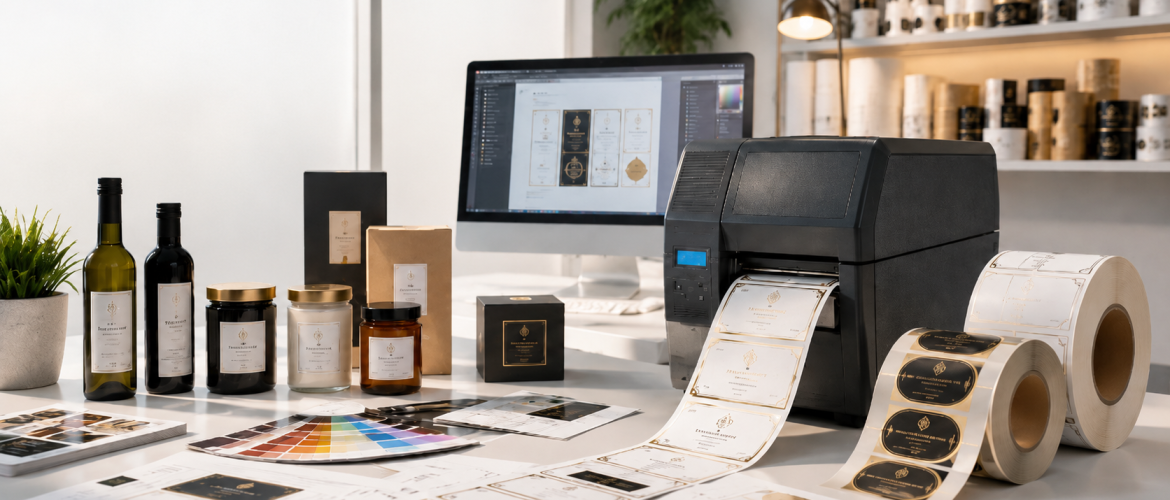
Custom labels play an important role in how customers identify, understand and remember a product. From food packaging and cosmetics to retail products, logistics cartons and industrial equipment, labels communicate essential information while strengthening the overall presentation of a brand.
Professional custom label printing allows businesses to create labels according to their exact size, shape, material, colour and application requirements. Instead of using standard labels that may not fit the product or environment, businesses can order a customised solution designed specifically for their operational and branding needs.
For businesses in Dubai and across the UAE, the right label must offer more than an attractive appearance. It should remain readable, adhere properly to the selected surface and withstand the conditions in which the product is stored, transported or used.
What Is Custom Label Printing?
Custom label printing is the process of producing labels based on the individual requirements of a business. The design, dimensions, adhesive, material, printing method, finish and information can all be customised.
A custom label may include:
- Company name and logo
- Product name and description
- Barcode or QR code
- Batch and serial numbers
- Manufacturing and expiry dates
- Ingredients and usage instructions
- Safety information
- Promotional messages
- Contact details
- Regulatory information
Custom labels may be produced using paper, polypropylene, polyester, vinyl, synthetic materials or other specialised substrates depending on the intended use.
Why Custom Labels Matter for Brand Identity
A label is often one of the first elements a customer notices when viewing a product. A clear, professionally printed label can help the product look organised, reliable and consistent with the company’s brand.
Colours, fonts, shapes and finishes should remain consistent across all products. This consistency improves brand recognition and gives customers a more professional experience.
Custom labels can also help smaller businesses compete more effectively. A carefully designed label can make locally produced goods, handmade products and new retail brands look ready for professional distribution.
Common Applications of Custom Label Printing
Custom labels are suitable for businesses across many industries.
Food and Beverage Products
Food labels can display product names, ingredients, nutritional information, preparation instructions, manufacturing dates and expiry dates. Labels may also be designed for refrigerated, frozen or moisture-prone environments.
Cosmetics and Personal Care
Cosmetic packaging often requires smaller labels with clear branding and detailed product information. Custom printing allows businesses to create labels for bottles, jars, tubes, boxes and containers of different shapes.
Retail and E-Commerce
Retail labels can be used for product identification, pricing, barcodes, packaging seals, promotional offers and shipping information.
Logistics and Warehousing
Warehouses use custom labels for cartons, pallets, racks, shelves and inventory identification. Barcode and variable-data labels make it easier to track products throughout the supply chain.
Industrial Applications
Industrial labels may need to tolerate heat, moisture, chemicals, abrasion or outdoor exposure. Synthetic materials and stronger adhesives are usually considered for these environments.
Choosing the Right Label Material
The correct material depends on where and how the label will be used.
Paper labels are generally suitable for dry indoor applications and short-term product packaging. They are commonly used for retail products, food containers, cartons and promotional stickers.
Synthetic labels offer better resistance to moisture, tearing and frequent handling. They may be suitable for cosmetics, cleaning products, refrigerated goods and industrial applications.
Polyester and vinyl labels are commonly considered when durability, flexibility or resistance to outdoor conditions is required.
Before ordering, businesses should explain the product surface, storage environment, expected lifespan and exposure conditions to the printing supplier.
Selecting the Correct Adhesive
The adhesive is just as important as the label material. A label may look attractive but still fail if it does not remain attached to the surface.
Permanent adhesives are suitable when the label should remain attached for the lifetime of the product. Removable adhesives are useful for temporary promotions or applications where the label must be removed without leaving significant residue.
Special adhesives may be required for rough surfaces, curved containers, cold environments, plastic packaging or products exposed to moisture.
Testing a sample on the actual surface before approving a large production order can help prevent adhesion problems.
Custom Shapes, Sizes and Finishes
Custom label printing gives businesses greater freedom to create labels that complement their packaging.
Labels can be produced in rectangular, square, circular, oval or custom die-cut shapes. The correct shape should fit the available space without hiding important product details.
Finishing options may include gloss lamination, matte lamination, metallic effects, transparent materials or protective coatings. The finish should support the desired brand appearance while also protecting the printed information.
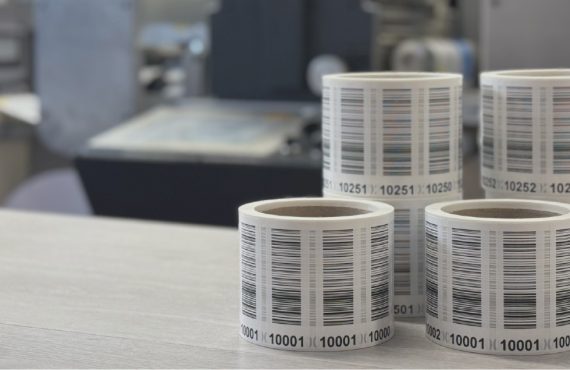
Variable Data and Barcode Labels
Some businesses require every label to contain different information. This may include unique serial numbers, batch codes, product codes, barcodes or QR codes.
Variable-data printing allows each label within the same order to carry different information. This can support inventory management, asset tracking, product authentication, event registration and logistics operations.
Barcode labels must be printed clearly and at the correct size so that scanners can read them accurately. The printing method, material and ribbon should be selected according to the scanner and operating environment.
Questions to Ask a Custom Label Printing Supplier
Before placing an order, ask the supplier about:
- Suitable materials for your application
- Minimum and maximum order quantities
- Adhesive options
- Custom shapes and sizes
- Colour matching
- Barcode and variable-data printing
- Proofing and sample availability
- Production time
- Finishing options
- Delivery across the UAE
Providing complete information at the beginning helps the supplier recommend a more suitable solution.
Why Work With a Local Label Printing Company?
Working with a Dubai-based supplier can make communication, sampling and delivery more convenient. Businesses can explain their requirements directly, examine material samples and request adjustments before proceeding with the full order.
Local support is particularly valuable when a business requires repeat orders, urgent quantities or consistent specifications across several products.
Label Tech UAE provides printed labels in different shapes, sizes and colours, along with barcode, self-adhesive and customised labelling solutions for different business requirements.
Conclusion
Custom label printing helps businesses combine product information, operational efficiency and brand presentation in one practical solution. The best results come from selecting the correct material, adhesive, size, finish and printing method for the intended application.
Businesses should evaluate the product surface, environmental conditions and required information before approving production. A carefully planned label can improve product presentation, reduce application problems and support more accurate inventory management.
For customised labels in Dubai and across the UAE, explore Label Tech UAE’s printed label solutions or contact the team for a quotation.