

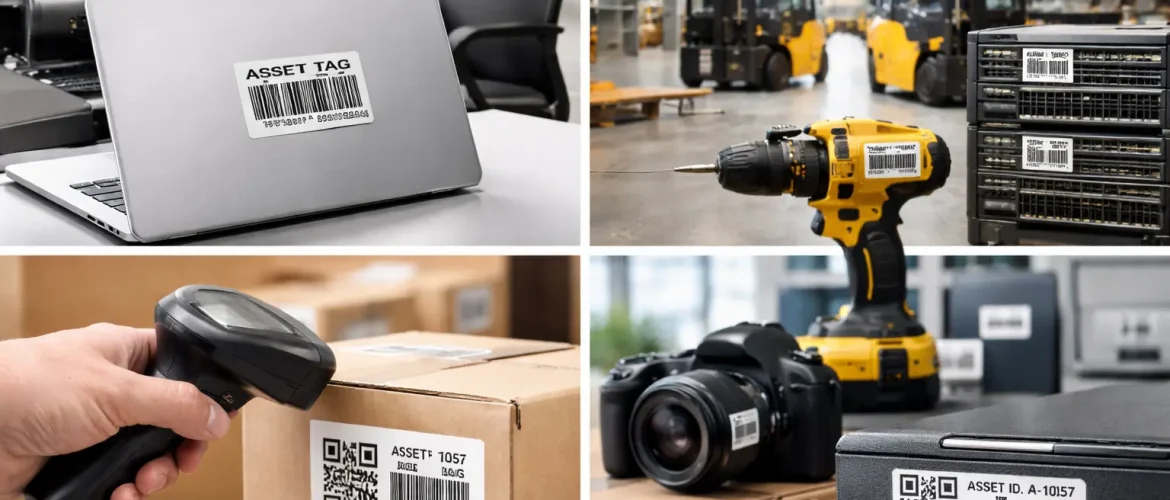
In today’s fast‑moving business world, keeping track of your valuable assets is more important than ever. From inventory tracking to security and maintenance, asset tags and asset labels help organisations stay efficient and in control. Businesses across Dubai and the wider UAE increasingly rely on asset tags Dubai and asset labeling solutions UAE to manage everything from office equipment to industrial machinery.
Let’s explore the main uses of asset tagging and labeling across different industries and why these tools matter for effective asset management.
What Are Asset Tags and Asset Labels?
Asset tags are physical labels attached to items your business owns. They often include barcodes, QR codes, serial numbers, or RFID technology that connects each tagged item to a digital tracking system. Asset labels serve the same purpose but might be simpler stickers or printed identifiers applied to equipment or inventory. These tools turn physical items into trackable, manageable digital assets.
1. Precise Inventory Tracking
One of the most common uses for asset tags is accurate inventory management. By assigning a unique tag to each item, companies can quickly scan inventory and update records in real time.
This helps businesses:
- Know exactly where each asset is located
- Track stock levels and usage history
- Reduce discrepancies between physical and recorded assets
With barcode and RFID technologies becoming more popular, asset tracking is faster and more reliable than ever.
2. Improved Asset Security and Loss Prevention
Asset tags help deter theft and loss. When equipment and tools are tagged, it becomes clear which items belong to the business. Some systems even alert managers when an asset moves unexpectedly or leaves a specific area.
This is especially valuable in industries with high‑value equipment or large inventories.
3. Better Maintenance Scheduling
Asset tagging can go beyond simple tracking. Many organisations use tags to record maintenance history and schedule future servicing. When an item is scanned, its maintenance records become instantly available, making it easier to plan repairs and avoid unexpected breakdowns.
This functionality is particularly useful for industrial machinery and fleet vehicles that require regular checks.
4. Faster Audits and Compliance Reporting
When assets are tagged, audits become much simpler and more accurate. Instead of manual counts and guesswork, staff can use scanners or software to verify assets quickly. This leads to:
- Faster audit processes
- More accurate financial reporting
- Less time spent on paperwork and data correction
This level of traceability also supports compliance with industry regulations and internal governance standards.
5. Enhanced Operational Efficiency
Organisations across sectors benefit from asset labeling by improving workflow efficiency. For example:
- Warehouses can identify inventory faster and reduce fulfilment delays.
- Offices can manage IT equipment without confusion.
- Hotels and hospitals can track essential equipment and supplies.
When staff spend less time searching for assets, productivity increases and operations run more smoothly.
6. Scalability Across Industries
Asset tags and labels are designed to be flexible. They work across many sectors, including:
- Healthcare: Tracking medical equipment and devices
- Retail: Monitoring stock and preventing shrinkage
- Manufacturing: Keeping track of tools, machinery, and parts
- Logistics & Warehousing: Managing inventory flow and shipments
- Construction: Tagging tools and heavy equipment locations
- Education: Monitoring lab equipment, computers, and furniture
This adaptability makes asset tagging one of the most widely used tools in modern asset management.
7. Integration With Digital Systems
Modern asset tags can connect to advanced inventory tracking software for even more insights. This allows businesses to:
- Sync data with ERP systems
- Generate reports for performance and utilisation
- Track assets in real time from dashboards or mobile devices
- Analyse usage patterns for smarter decision‑making
Integration makes asset tagging solutions in UAE an essential part of digital transformation for forward‑thinking businesses.
Final Thoughts
Whether you operate a small office or a large enterprise, asset tags and asset labeling solutions are powerful tools that help you stay organised, secure, and efficient. From asset tags Dubai to nationwide solutions across the UAE, these tools support:
- Accurate inventory tracking
- Loss prevention and security
- Efficient maintenance and audits
- Operational productivity
- Seamless digital integration
Investing in a robust asset tagging strategy delivers both immediate benefits and long‑term control over business assets. If you want to safeguard your resources and improve how you manage them every day, asset tagging should be a central part of your operational plan.
